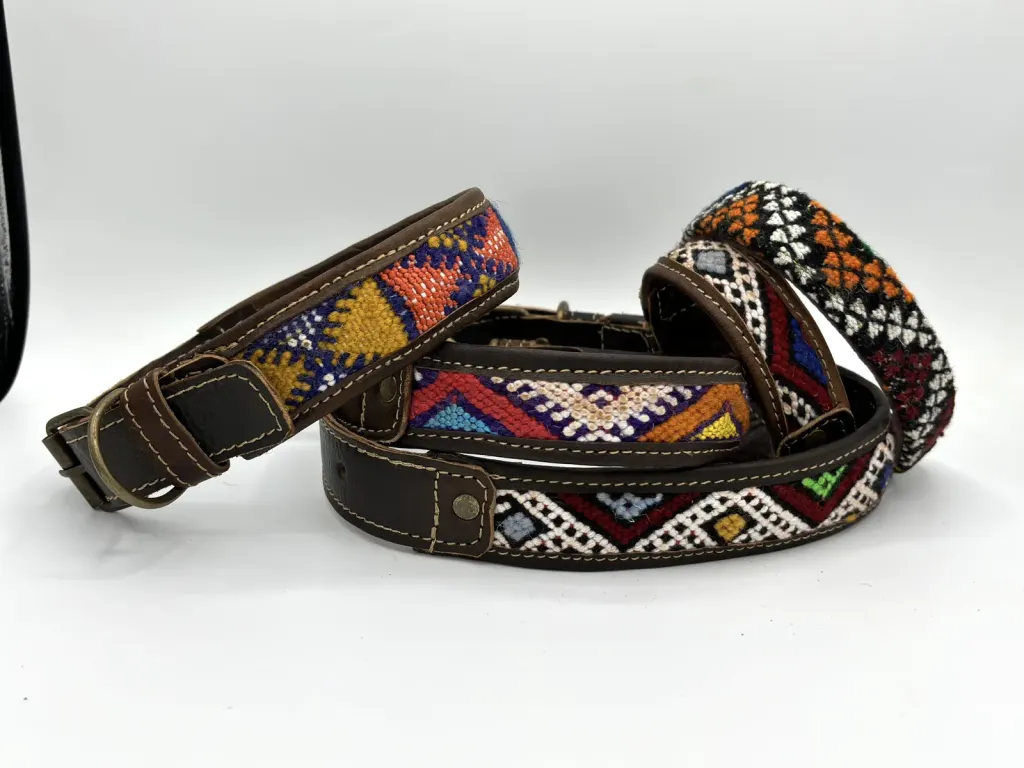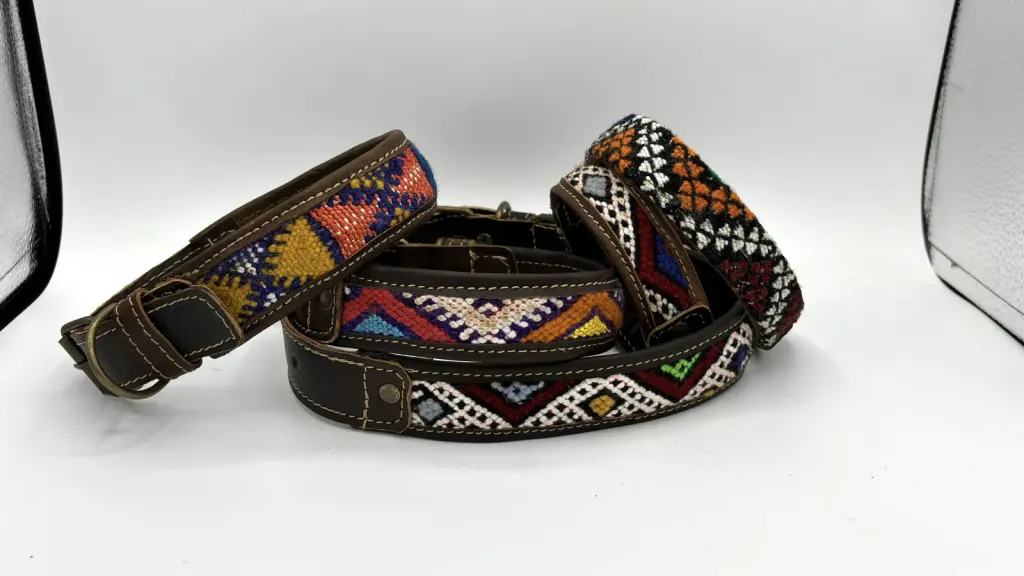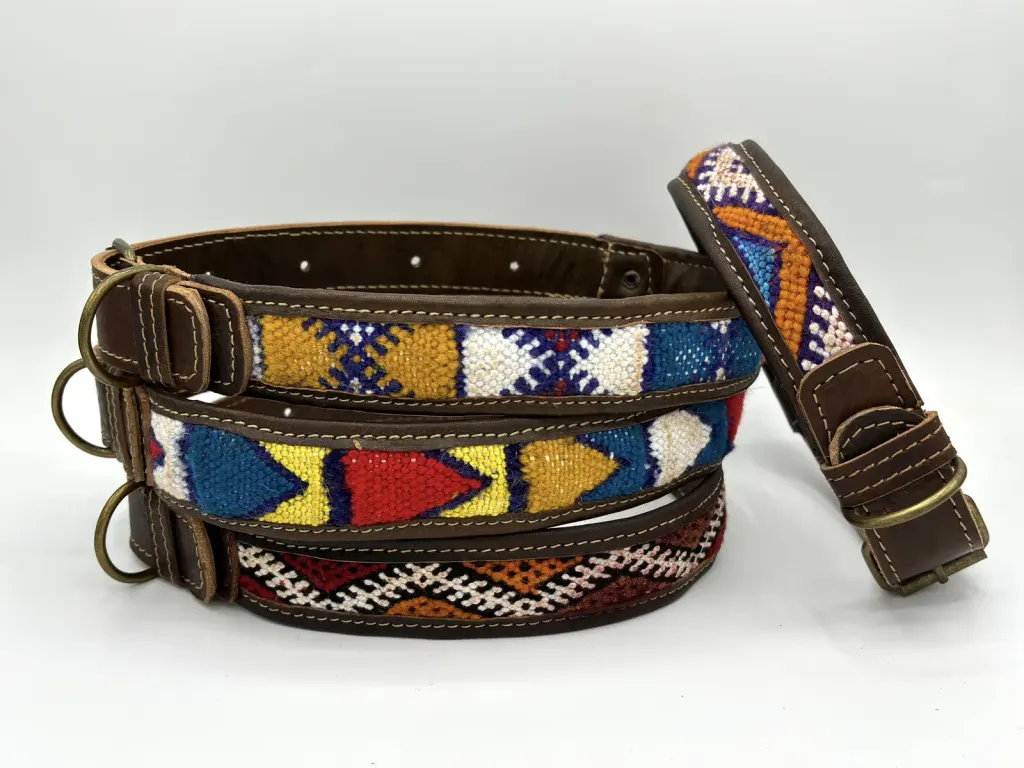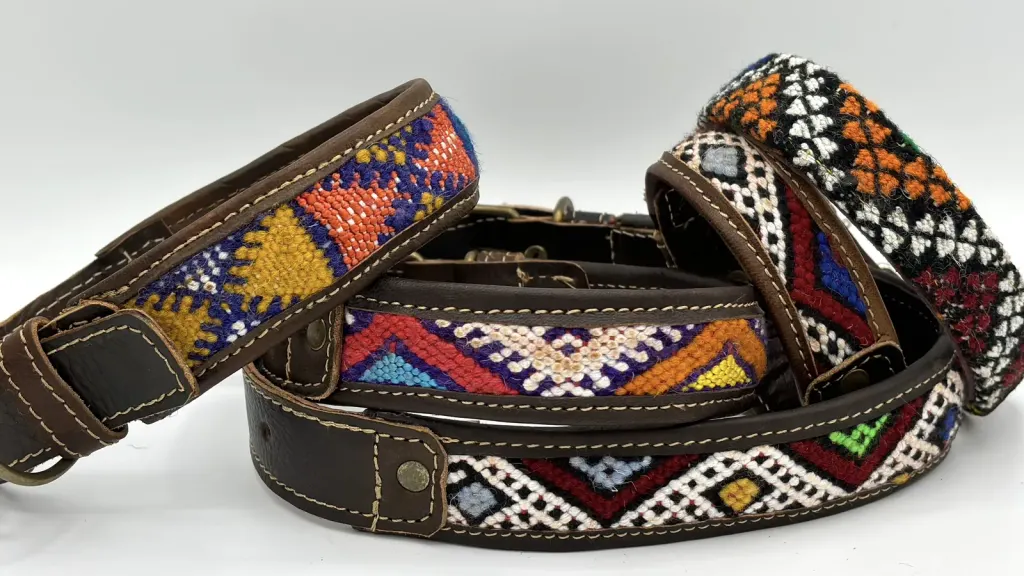
Mass-produced collars win on price and sameness. Handmade ones win on materials, character and the chance to repair them. Neither is wrong, and the right pick depends on what you value and how your dog lives.
We sell handmade collars, so we have a stake in this question. We’ll try to be fair anyway, and we won’t name or knock any other maker.
How do the two kinds of collar really differ?
Mostly in materials and process. A factory collar is often cut and assembled by machine from nylon webbing, with a molded plastic or stamped metal buckle. Some factory collars use leather too, and some are very good. Handmade usually means hand-cut leather, hand-finished edges and stitching, and a small batch.
| Mass-produced | Handmade | |
|---|---|---|
| Price | Usually lower | Usually higher |
| Consistency | Every piece matches | Small variations are normal |
| Materials | Often nylon, sometimes leather of varying grades | Chosen by the maker, such as full-grain leather |
| Repairs | Often cheaper to replace | Often easier to restitch |
| Character | Uniform | Individual |
| Best for | Budgets, backups, water-loving dogs | Daily use, long term |
The word “often” is doing real work in that table. Quality varies inside both groups, so judge the collar in front of you, not the label.
What do leather grades mean?
Grades describe which layer of the hide you get and how much of the original surface remains. Terms get blurry in some listings, so here is a plain version based on a leather sourcing guide.
- Full-grain leaves the whole grain surface alone. Growth lines and scars can show.
- Top-grain is that outer layer after sanding or buffing, then finished for an even look. It can be excellent, but it ages differently.
- Genuine leather only means real leather is present. In the trade it often points to finished split leather, so ask more.
- Bonded leather is shredded fibers held together by a binder, usually under a polyurethane face.
The U.S. Federal Trade Commission has rules here. Its Leather Guides say a product made from ground, shredded or bonded leather should state what percentage is actual leather. Their example reads “Bonded Leather Containing 60% Leather Fibers and 40% Non-leather Substances.”
Every BohoBarks collar uses full-grain leather. Our materials page shows it beside the woven band.
Which questions should you put to a seller?
A listing that only says “genuine leather” leaves gaps. The sourcing guide suggests asking about the hide layer, thickness, tanning method and finish. Those four answers tell you more than any adjective.
Ask about origin, too. A maker who can’t answer may be hiding nothing, but you deserve to know what is unknown. Our own answer is short: handwoven in Morocco, nothing more. We’d rather admit the gap than invent a village.
What should you inspect on any collar?
The same few points, whether it costs $12 or $50.
- Stitching. Even, tight stitches, with no loose ends or skipped spots, especially around the buckle and ring.
- Hardware. A closed ring, not one bent open. A tongue that sits straight and holds.
- Edges. Smooth, with no rough or cracked spots that could rub a neck.
- Holes. Clean punches, with leather around them that is neither thin nor split.
- Fit. An ill-fitting collar is a bad one at any price. Use our size guide and the two-finger rule.
No special tools needed. The inspection takes a minute and works on any brand.
One more habit pays off. Buckle the strap on your dog and note which hole you land on. A middle hole leaves room to tighten or loosen as a coat thickens or thins, while the very last hole may mean another size deserves a look.
Does handmade pay off over time?
Sometimes. Cost per year of use is a better yardstick than the sticker. These numbers are an example, not a promise, so plug in your own.
| Collar | Price | Years of use | Cost per year |
|---|---|---|---|
| Inexpensive, replaced often | $12 | 1 | $12 |
| Mid-priced | $25 | 2 | $12.50 |
| Handmade, well cared for | $50 | 5 | $10 |
The handmade row only wins if the collar truly lasts and your dog stays the same size, so be honest about both. Five years can’t be guaranteed. Leather does reward good care, though, and our leather collar care guide shows what that looks like.
Money isn’t everything here. Some buyers pay for a pattern woven by hand, and that is a real reason, even if it never shows in the math.
Is variation a flaw?
Not with handwork. Each woven band comes from a loom, not a mold, so no two are exactly alike. A shade may run lighter or darker, and a diamond might land a little left of where it sat in the picture.
Our collars come in small batches, so variation is part of the product. Yours will look like its design, with a few quirks of its own. For sizing trouble, see our shipping and returns page. Our story page says more about where the collars come from.
When does a factory piece make more sense?
A few cases favor it, and we’d rather say so.
- Puppies. A growing pup can outgrow a collar fast, so something inexpensive suits the first months.
- Daily swimmers. Water is hard on leather. The Canadian Conservation Institute says most leathers are damaged by direct contact with water, so a lake-loving dog may be better served by nylon.
- Backups. A spare for the car or the wash always helps.
For a grown dog’s everyday collar, a handmade one deserves a look. If the Moroccan look appeals, try Medina Mosaic, or browse the full BohoBarks collection. The FAQ covers common questions, and our care page lists the routine for leather and wool.
Frequently asked questions
Is a handmade dog collar worth it?
Often, yes, if you care how it’s built and want something you could repair. A well-made factory piece may serve a dog just as well for less. Handmade fits best on daily wear you’ll keep for years.
What is full-grain leather?
It’s the top layer of the hide with its natural surface left intact, marks and all. Trade sources rank it as the strongest everyday grade, and it gains patina over time. Top-grain is buffed smoother, while a genuine leather label only says real leather is somewhere inside.
Why does my collar look a little different from the photo?
Human hands wove that band, so shades, proportions and pattern placement shift slightly between collars. That’s handwork, not a defect. If the size is off, check the returns details on our site.
How long does a leather collar last?
No honest single number exists. Your dog’s habits, time spent in water and your care routine all matter. Check stitching and metal regularly, and retire the strap at the first cracks, fraying or wobble.
If a handwoven pattern on full-grain leather sounds right for your dog, shop BohoBarks collars and find your size.