Loop a soft tape around the base of your dog’s neck, keep two fingers of slack, and read off the inches. That number picks the size. Ours run XS 8-11”, S 10.5-14”, M 13.5-18” and L 16-23”. Falling between two ranges? Take the lower size.
Which tools make the job easy?
A tailor’s tape works best. Nothing handy? The American Kennel Club says string, ribbon or even a shoelace will do. Wrap it, pinch the crossing point, then stretch the string along a ruler. Pocket some treats first, because snacks keep a wriggly pup still long enough for an honest reading.
Where does the tape sit?
Aim low, just above the shoulders, where a collar naturally rests. AKC starts at the withers, that ridge between the shoulder blades. Make the dog stand. Sitting or slouching bunches skin and adds phantom inches.
Long necks are the odd case. Collars on those breeds ride high, almost under the jaw, yet AKC still says to go farther down.
What are the steps, one by one?
- Stand the animal on flat ground, treats ready.
- Circle the neck base with tape lying flat on the coat.
- Slip two fingers underneath. If they won’t fit, ease off.
- Mark where the ends meet and note the reading.
- Do it a second time, because wiggles happen.
Write the figure down before you open a chart. Memory rounds numbers in strange directions.
How snug is snug enough?
Firm but not squeezing: that’s the two-finger rule. The AKC measuring guide wants room for two fingers once the buckle closes. A second article from the club trims the rule for small dogs, who manage with a single finger.
Ten seconds is all it takes to catch a bad fit:
- Loose: the band spins, creeps toward the ears on a backward step, or swallows three fingers. A slack collar lets some dogs wiggle free and bolt, the club warns.
- Tight: nothing slides under it, fur looks flattened, or your pup scratches at its throat.
Re-check after a bath or haircut. Both change what sits underneath.
Which BohoBarks size matches your measurement?
Find your number in the table. Each range is the neck size a collar was cut to fit.
| Size | Neck range | Typical dogs |
|---|---|---|
| XS | 8-11” | Chihuahua, Yorkie, Papillon |
| S | 10.5-14” | Mini dachshund, small poodle, terriers |
| M | 13.5-18” | Beagle, spaniels, smaller Labs |
| L | 16-23” | Labs, goldens, huskies, boxers |
Ranges overlap on purpose. A 10.5-11” neck suits XS or S. Across 13.5-14” you can choose S or M. Anything between 16 and 18 inches could wear M or L.
Between sizes, size down. Our care card says snug and secure beats roomy. Some general guides, AKC’s included, advise buying bigger when unsure. For our own work we disagree: the smaller size still has punched holes for loosening, while a larger one cinched to its last hole leaves a long loose tail and extra room to back out.
Two edge cases deserve a straight answer. PetSmart’s published chart lists 6-8” for a Chihuahua or teacup Yorkie, and our XS begins at 8”, so the tiniest necks fall just short. At the far end, that chart puts Great Danes, mastiffs and Saint Bernards at 24-30”, whereas our L stops at 23”. Measuring first avoids a wasted order. The size guide lays every range side by side.
Do breeds have typical neck sizes?
Typical, never exact. Two Labradors can differ by several inches, depending on build, age and weight. Use this list as a first guess, and let the tape get the last word.
| Breed | Typical neck size |
|---|---|
| Chihuahua | 8-14” |
| Yorkshire Terrier | 6-12” |
| Pomeranian | 10-14” |
| Shih Tzu | 10-14” |
| Pug | 12-16” |
| French Bulldog | 12-16” |
| Beagle | 12-18” |
| Cocker Spaniel | 12-18” |
| Pembroke Welsh Corgi | 14-16” |
| Border Collie | 14-18” |
| Siberian Husky | 16-22” |
| Boxer | 16-22” |
| Golden Retriever | 16-24” |
| Labrador Retriever | 18-24” |
| German Shepherd | 18-24” |
| Rottweiler | 24-30” |
Source: Canine Journal’s breed neck-size table, a pet-publisher’s averages. Other charts differ by an inch or two, which is one more reason to bring a tape.
Chasing a specific size? Our notes on the best collar for small dogs and the best collar for large dogs go deeper.
Should you re-measure a growing puppy?
Often, and with some suspicion. RSPCA Australia notes that puppies grow extremely quickly and advises checking fit a few times weekly. For medium and large breeds it recommends starting small, then replacing each one as the youngster outgrows it.
Leather and woven wool are meant for years of wear, not weeks. That suits a neck that has mostly stopped growing. Plenty of owners buy a cheap nylon band for the fast months, then move up to a keeper. A vet can estimate when growth will finish.
Does a fluffy coat change the reading?
It can. Measure the neck itself, never the fluff. Press gently through the fur until you feel muscle push back. Hair compresses under a buckled band, so a reading taken over loose coat runs high.
Once it’s on, run your fingers beneath. You should meet skin or a thin layer of fur, never a tight wall. A husky blowing its winter undercoat in spring may need another look weeks later. Brushing the woven band as part of regular care also reveals when something shifts.
Can you measure a wiggly dog alone?
Yes, though a helper makes life easier. Back your dog against a wall, hold a treat near the nose so the head stays level, and let the tape rest loosely until you’re ready to close it. A lifted chin stretches the skin, while a dropped head wrinkles it. Aim for relaxed and facing forward. Nervous animals do better with two quick tries than one long session, so take the reading twice and stop there.
What mistakes ruin a measurement?
Three come up again and again. A sitting subject is one. Pulling the tape hard enough to dent the coat is another. Trusting last year’s number is the third, since dogs gain and lose weight, and necks follow. Take fresh numbers whenever you order.
Frequently asked questions
Which size do I pick if my dog is between two?
Go smaller. Our care card puts it plainly: between sizes, size down for a snug, secure fit. The overlap zones are 10.5-11”, 13.5-14” and 16-18”. Still unsure once it arrives? Our shipping and returns page explains exchanges.
How much room should a collar leave?
Two fingers should slide under the buckled strap without a fight. AKC says small dogs can manage with one, while large breeds get two. Slack bands let a dog back out, and tight ones rub.
Is an old collar a good size guide?
Only as a rough hint. Makers size differently, so one brand’s medium may not match another’s. A tape measure laid against the neck gives a number you can trust.
When should a puppy’s collar be rechecked?
Check it a few times a week while the pup is growing. A collar that fit on Monday can pinch by Saturday, so slide two fingers under the band each time and move up once they stop fitting.
Ready to choose?
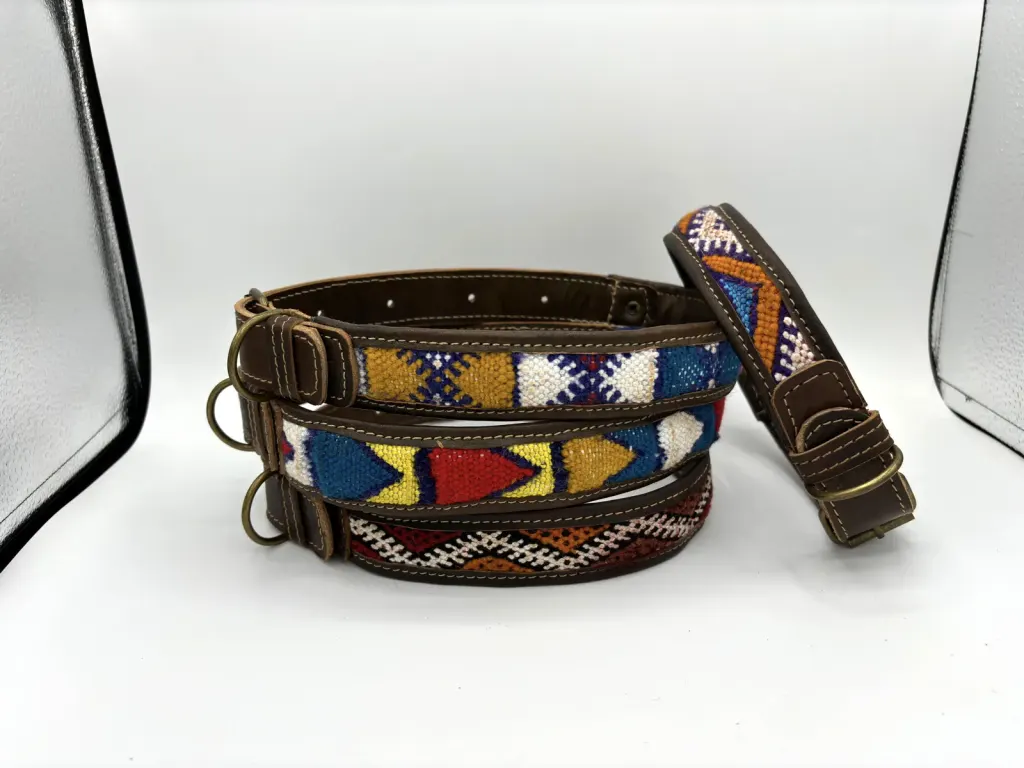
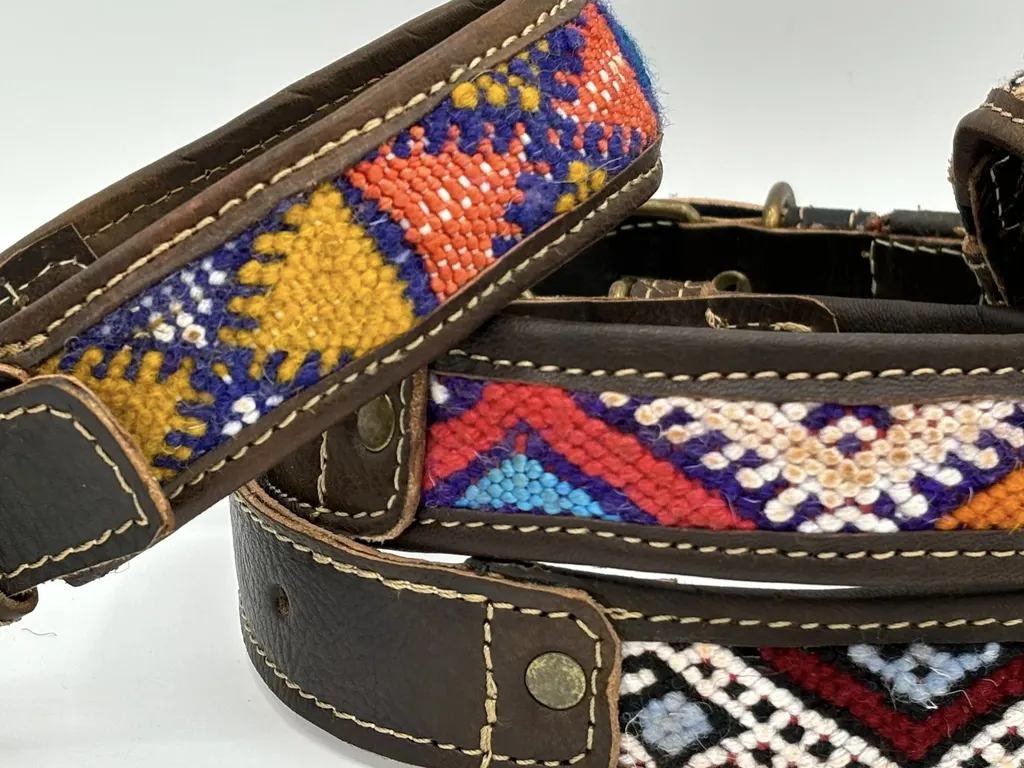
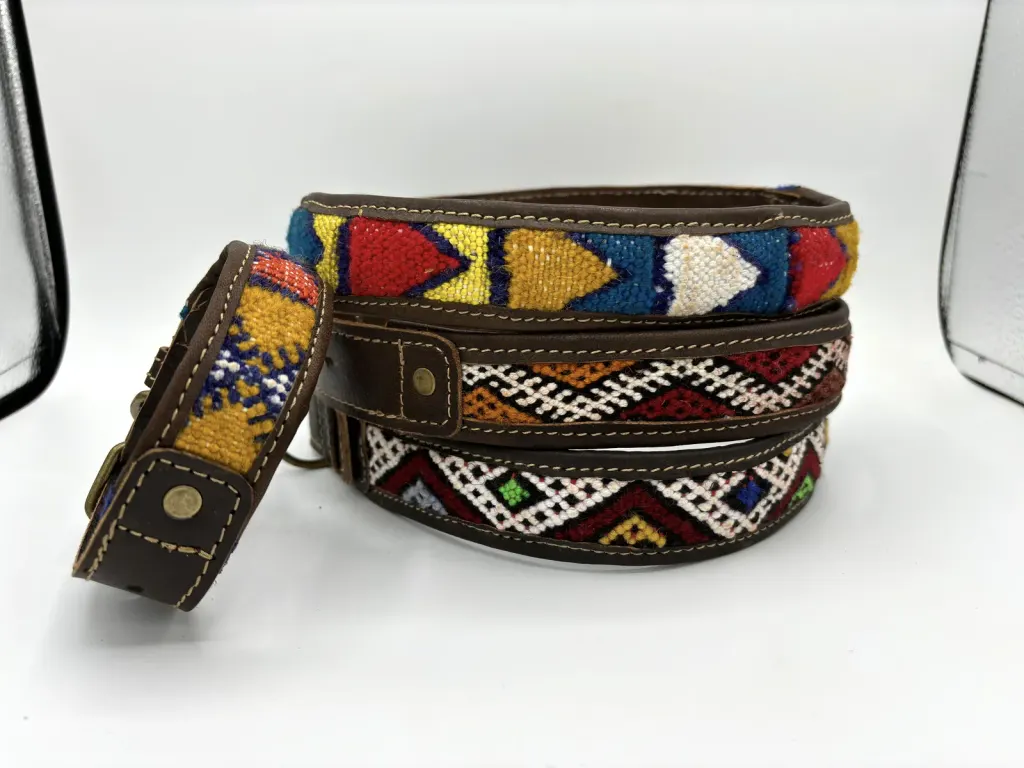
Number in hand? Pick a size in the size guide, then browse the shop. Mustard, rust-red and navy against a dark coat looks striking in Caravan Dreams. Every design is $50 in all four sizes and ships from Durango, Colorado. Walks that involve hard pulling or coughing? Read collar vs harness before you buy.