Most dogs end up with both. The neck band carries tags and suits easy strolls, while a harness takes over for pullers, flat-faced breeds, toy dogs and anyone with airway trouble. Here is how to decide, backed by vet-group guidance.
What is each one actually for?
The collar is the everyday piece. According to the American Kennel Club, flat-buckle versions rank among the most readily available dog products, and plenty of trainers open leash lessons with one plus a 4-foot lead.
A harness works another way. PetMD explains that it spreads leash pressure over the torso rather than letting it gather at the throat. For a hound that surges ahead, that shift is the whole point.
How do the two compare side by side?
| Collar | Harness | |
|---|---|---|
| Best at | ID tags, style, relaxed outings | Pullers, tiny frames, airway worries |
| Throat load | Focused at the neck | Spread over the ribs |
| On and off | A single buckle | More straps to sort out |
| Handling | Often simpler with a big dog | Can ask more of your arms |
| Slipping out | Possible when loose | Same risk if oversized |
| First lessons | Common starting choice | Added once tugging persists |
Control is a trade-off. The AKC notes that collars can offer steadier command with less muscle, depending on size, while straps may demand extra effort. Neither type forgives a poor fit: cut too big, either one lets an animal wiggle out and bolt.
When does a harness win?
Four situations stand out.
Pullers. RSPCA Australia calls a strap ideal for walking and training because hauling can hurt a neck. Dogs that keep pulling despite lessons get a front-attach recommendation, fitted by a reward-based trainer.
Toy breeds. Tracheal collapse is most common in toy and miniature breeds, per the Merck Veterinary Manual. The AKC’s page on it lists a strap in place of a collar among management steps and warns that strain on the neck can worsen the honking cough. A cough like that deserves a vet visit.
Flat faces. Pugs, bulldogs, Boston terriers and boxers run higher odds of airway obstruction. For mild cases, Cornell’s veterinary college advises a harness instead of a neck collar.
Slim heads. Greyhounds and whippets often have heads smaller than their necks, so a plain band can slide off. The AKC suggests a martingale for some, while RSPCA leans toward a strap for greyhound types.
Which kind of harness suits which dog?
Styles differ more than owners expect. A back-clip model is a popular pick with small-dog owners, the AKC says, since it spares the throat and keeps the lead off the legs. Front-clip designs give you a steering advantage: when a dog surges, the clip point swings its body sideways. Pressure-on-the-chest versions, sold as no-pull, discourage hauling by tightening across the front. PetMD stresses that only that last kind is built to cut pulling, while a plain strap does not.
Head halters make a fourth option. The AKC rates them the strongest control for big dogs that haul. RSPCA is warier: used badly, they can jerk a head sideways, so it wants a front-attach strap and slack-line lessons tried first, with a trainer doing the fitting.
When is a plain collar enough?
For a calm walker on a slack line, a well-fitted band does the job. RSPCA suggests teaching slack-line manners first: stand still like a tree whenever the line tightens, then reward each step that arrives with slack. Many dogs learn this with no special gear. The collar also keeps tags where a rescuer or neighbor can read them.
Is wearing both at once allowed?
Yes. RSPCA describes a double-ended lead for dogs in a front-attach strap: one clip goes on the strap’s front ring, the other on the back ring or on the collar itself. You steer from the rear clip and use the front one for turns whenever pulling begins.
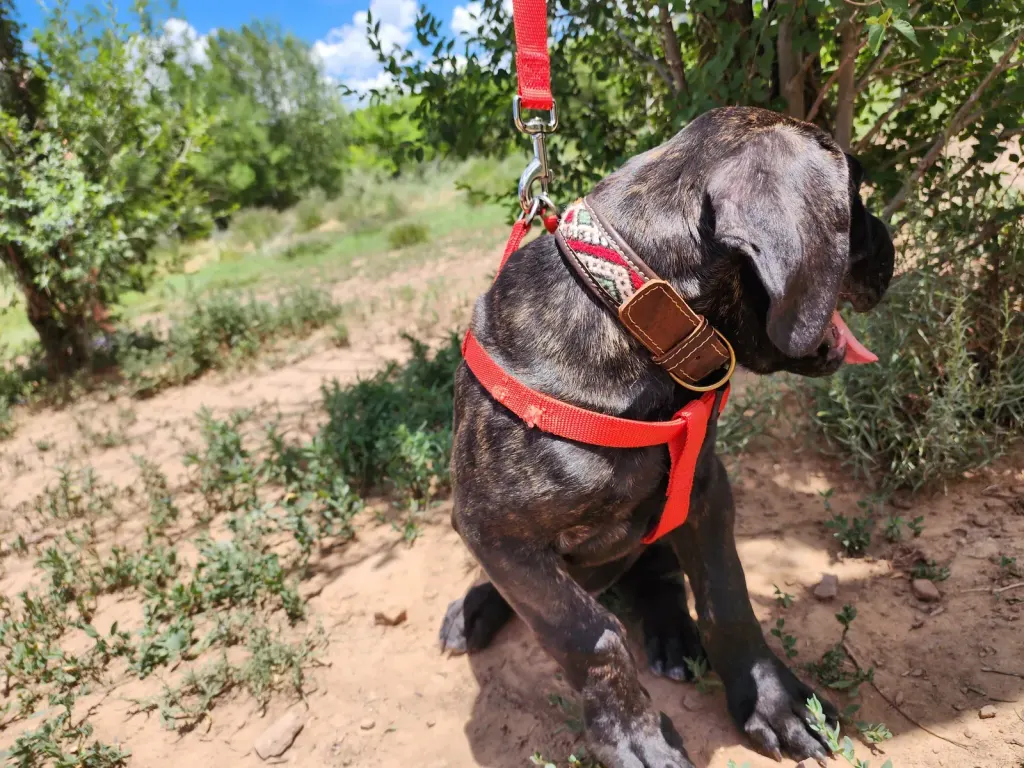
The brindle dog in our photo shows the combination: a crimson lead clipped to a red-orange strap, above a woven collar with red, cream and green in the band.
How can you tell your current gear is wrong?
Watch a ten-minute walk. Gagging, hacking or a goose-like honk when the lead goes taut points to throat strain, and the AKC lists pressure on the neck among cough triggers, so phone your vet. A dog that leans hard against its lead until the front paws lift is telling you the collar takes too much. Rubbed fur behind the elbows says a strap sits too tight. A pet that backs out of any gear needs a closer fit or limited-slip tack.
How do you introduce a new harness?
Go slowly. Lay it on the floor and let your pup investigate, scatter treats nearby, then slip it on for ten seconds and reward. Take it off, repeat, and stretch the time a little each round. A step-in style that never passes over the ears suits head-shy dogs. Many come to treat the strap as a signal that a walk is coming.
How should each one fit?
Collars first. AKC says one finger of room suits small dogs, while two fingers suit large breeds. Our how-to-measure guide and size guide hold the numbers.
Straps need another test. PetMD says two fingers should slide beneath one, yet a dog must not be able to back out the rear or wiggle free at the front. Tighten one buckle at a time, then peek behind the elbows for rubbing. Too snug hurts, especially in hot weather, AKC adds.
What about puppies?
Keep it simple. AKC recommends a standard flat collar for pups just learning to walk on a leash. RSPCA adds that puppies grow extremely quickly, so check fit a few times weekly and expect to replace gear as they get bigger. A piece woven by hand makes more sense once growth slows.
Where does a BohoBarks collar fit in?
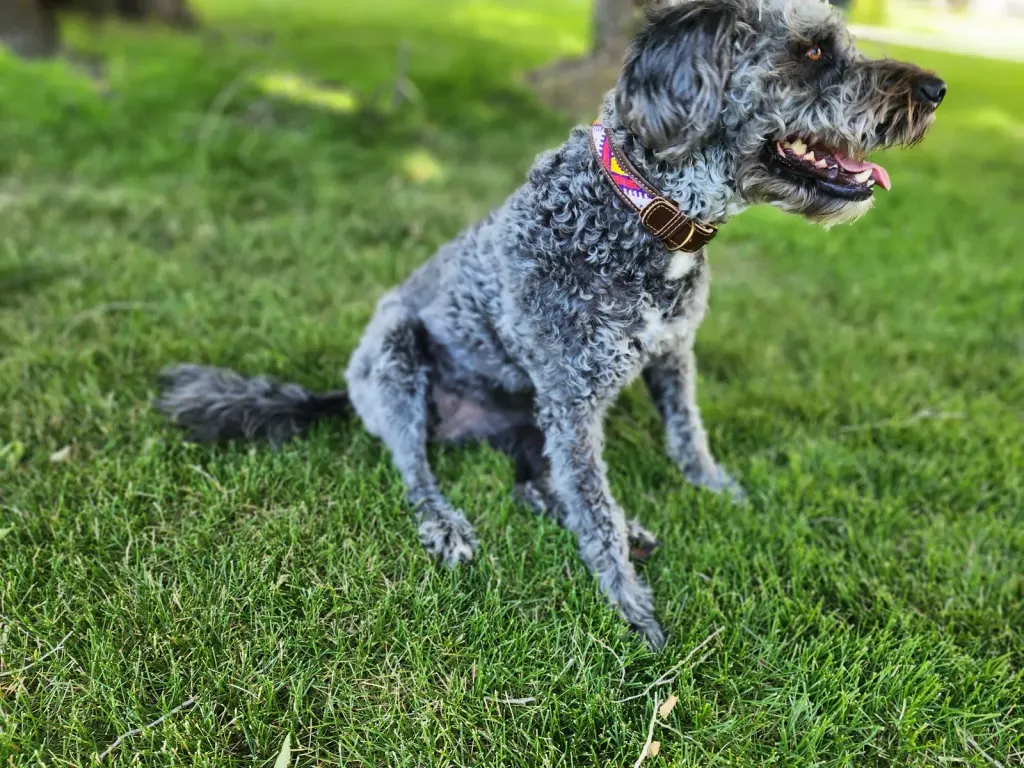
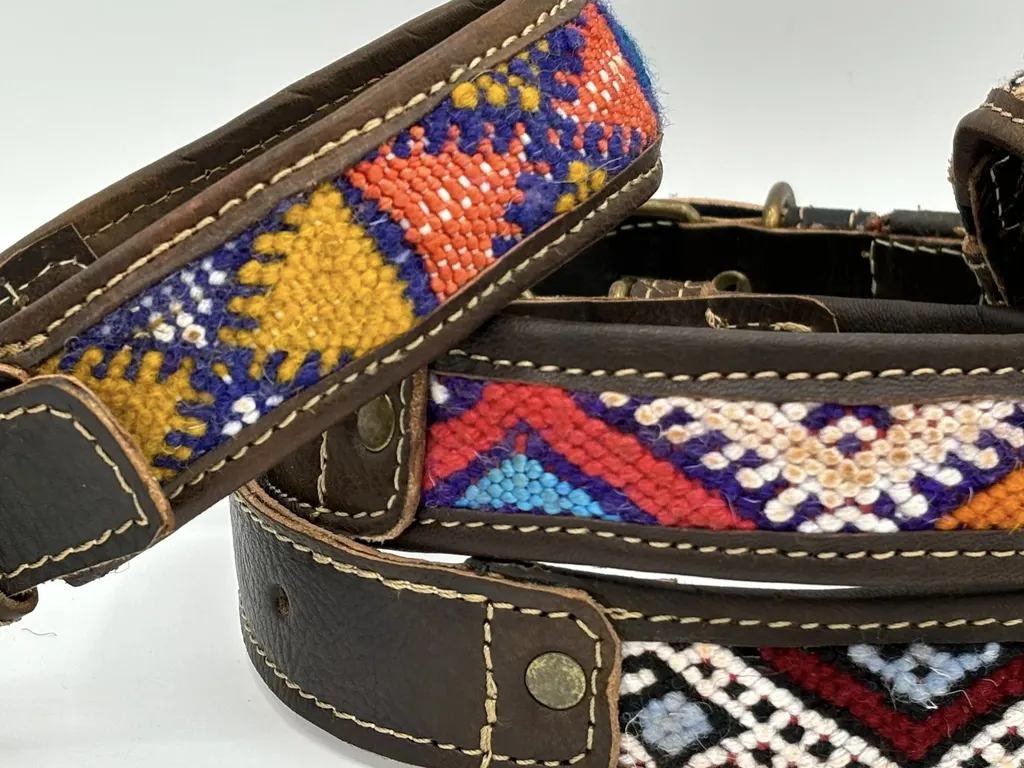
Honestly, in the style-and-tags slot. Ours is leather with a handwoven wool band, brass-tone hardware and a D-ring for tags. It suits calm walkers, ID duty and photos. It is not a pulling tool, and we do not sell harnesses. For a puller, a toy breed or a snub-nosed dog, walk in a harness and keep the collar for ID.
Looking for sizes? Our small-dog collar guide and its large-dog edition go deeper. Cream, red and black in Berber Sands pairs nicely with a bright strap.
Frequently asked questions
Can a dog wear a collar and a harness at the same time?
Yes, and the pairing is common. Tags stay on the collar, the strap carries the walking load, and one lead can clip to both rings.
Is a collar bad for dogs?
Not on its own. Trouble comes from pressure on the throat, which pulling, a fragile windpipe or a flat face can make worse. A snug, correctly sized collar on a relaxed walker is ordinary and safe.
Should puppies start in a harness?
Either can work. Many trainers favor a plain collar at the start, then a front-attach strap if pulling continues. Puppies outgrow gear fast, so recheck the fit weekly.
Does a dog in a harness still need a collar?
Usually. Tags need somewhere to hang, so the collar quietly handles identification while the strap handles the stroll.
Ready to choose a collar?
If a collar suits your dog, browse every design in the shop. Each one costs $50, comes in four sizes and ships from Durango, Colorado.